The deal closes.
The risk begins.
The deal thesis is most fragile in the first 100 days.
Research on post-close performance consistently shows 5 to 10% EBITDA drift in the first 100 days when leadership is uncertain. On a $14M revenue and $2.3M EBITDA platform (the most common landscape PE deal), that's between $115K and $230K of EBITDA put at risk in the window where the deal thesis is supposed to be taking root.
Most of this drift is invisible until it shows up in the first board package. By then, the deal thesis is already explaining itself rather than executing.
Sources: McKinsey post-close performance research, HBR M&A integration studies, and observed patterns in green-industry platform acquisitions across 80+ companies audited.
Not the strategy.
Execution.
The deal thesis you underwrote isn't undermined by markets, customers, or strategy in the first 100 days. It's undermined by an uncertain operating layer. The pattern is consistent.
Decisions slow.
The departing leader's authority dissolves. The incoming leader hasn't arrived. Mid-level managers escalate decisions that used to get made in the field, and the operating partner becomes the bottleneck for things that should never reach the portfolio level.
Institutional knowledge walks.
Where equipment is in rotation. Which crews work well together. Which clients tolerate weather delays. The handshake on pricing for the strip mall on 41 that's been at the same number since 2019. None of it documented. All of it in the departing leader's head.
Reporting becomes reconstruction.
Without an operating cadence, every board cycle is a one-time data hunt. Same numbers don't appear in the same format twice. The IC asks reasonable questions that take a week to answer. Confidence in the deal model erodes in the silence.
The new CEO inherits ambiguity.
When the permanent CEO finally starts, they walk into a hole. Their first 30 days get spent learning what's broken by breaking things. The thesis they were hired to execute is already three months behind. Most of them recover. Some don't.
Operator in the seat.
From day one. Through exit.
The 100-day window has a structure. The engagement is built around it. Each phase produces a specific deliverable the next phase depends on.
Operational Walk
Walk operations. Review financials. Interview leadership. Identify decisions that have been waiting. Establish the baseline.
Board-Ready Assessment
Operational Assessment Report delivered. Risk areas missed in diligence flagged. Board cadence locked. Decision rights mapped.
Execution Structure
Operating cadence installed. SOPs built for the highest-risk processes. Field execution stabilized. Same numbers, same format, every board meeting.
Transition Memo
Incoming permanent CEO receives a complete transition memo. What's working, what's broken, what got installed, what to prioritize in the first 30 days.
One rate.
Three scenarios that show the math.
Pricing is anchored to the deal economics of $5M to $20M landscape platforms. All-in. Travel built in. No variable billing. No expense layers.
Three example scenarios across the deal range.
Engagement fee shown as % of total deal value, the lens an Operating Partner uses to defend stabilization spend.
Smaller standalone or platform foothold.
Standalone platform acquisition.
Platform with roll-up potential.
Engagement structure.
Defined before day one.
Deliverables & Cadence
- Operator in the seat. Full COO and platform leadership authority from day one.
- Operational Assessment Report by end of week two, board-ready.
- Decision Rights Document mapped across the org, week three.
- SOP library for the highest-risk processes (12 to 18 documents).
- Board cadence. Same numbers, same format, every meeting after week two.
- Transition Memo for the incoming permanent CEO at exit.
- Optional 30-day overlap with permanent hire, prorated at standard rate.
Engagement Terms
- Onsite cadence. 3.5 days weekly Mon to Thu, Friday remote.
- Travel built into the rate, no separate billing.
- Deposit. 33% on signed engagement letter.
- Balance. Equal monthly installments, ACH or wire, Net 15.
- Cancellation. Either party with 30-day written notice.
- Authority defined in the Statement of Work before day one.
- Insurance.$2M Professional Liability, $1M General Liability, COI provided.
This works in specific situations.
100-Day Protection isn't for every deal or every platform. The discernment is part of what makes it useful when it does fit.
This Fits
Post-close stabilization with real execution risk.
- Platform has just closed or is about to
- Leadership gap or transition exists at the platform level
- Operating partner bandwidth is stretched across the portfolio
- Execution risk is unclear but real
- Green-industry operational fluency would shorten time-to-stability
This Does Not
Stable structure or non-operational situations.
- Founder-led platforms where the founder is staying through the hold
- Add-ons absorbed by an existing platform COO
- Platforms below ~$8M revenue and ~$1M EBITDA
- CFO is functionally running operations, needs only a search backfill
- Distressed situations requiring a turnaround specialist
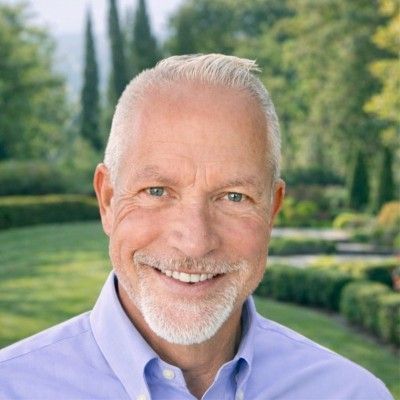
The operator your portfolio company actually needs.
I've spent thirty years operating in the green industry. As a landscape company owner three times. As a COO. Walking operations inside companies at every stage from $2M to $20M+ in revenue.
The reason this offering exists is because what I needed when I was running my own platforms didn't exist. I needed an operator. Not an advisor. Not a coach. Someone who would sit in the chair with full authority while the search ran.
I built LeadScape™ after learning, slowly, expensively, the hard way, that the absence of operational infrastructure was costing me hundreds of thousands of dollars a year. Every engagement I run now is built on what I had to figure out so the platforms I work with don't have to.
For PE engagements specifically, the difference is fluency. I speak the language of the deal team, the board, and the field. The three audiences an Operating Partner is briefing simultaneously during the 100-day window. That bandwidth gets returned to the Operating Partner so it can go toward the value creation plan instead of into stabilizing a leadership gap.
Operating Partners tend to ask the same things first.
Tell me about the platform.
I'll tell you if there's a fit.
A 25-minute call. No deck. No pitch. A straight answer on whether 100-Day Protection fits the situation. If it doesn't, I'll tell you what would.
Schedule the Call